
Quick Summary
To hang floral wall art for beginners, gather a pencil, level, tape measure and hardware rated for the piece's weight, then mark the position lightly before mounting. Center the artwork about 57 inches from the floor, and check the weight limit on every hook or strip before you hang anything.
- A pencil, bubble level, tape measure and stud finder cover most jobs.
- Read the weight rating on hooks and strips, since that number is the one to trust.
- Center the artwork about 57 inches from the floor as a starting point.
- Leave 6 to 8 inches between a sofa's top and the bottom of the frame.
- Skip adhesive strips on textured drywall, plaster or brick.
Table of Contents
- Gathering Your Tools and Wall Art Hanging Hardware
- How to Hang Art Without Nails: Damage-Free Options for Renters
- How High to Hang Wall Art: The 57-Inch Rule and When to Adjust It
- Step-by-Step: Mounting Your Floral Piece
- How to Arrange Wall Art: Spacing Multiple Floral Pieces
- Common Mistakes to Avoid When Hanging Floral Art
- Booking Your Custom Floral Painting or Choosing a Print
- Frequently Asked Questions
Gathering Your Tools and Wall Art Hanging Hardware
Last Updated: October 29, 2026
Hanging floral wall art for beginners is easier than most people expect. You need a few basic tools and the right hardware, and then you can start. A little preparation goes a long way.
Start with a short list. A pencil, a level, a tape measure, and a stud finder cover most jobs. Add a drill only if you plan to use screws or wall anchors.
- Pencil for light marks on the wall
- Bubble level or a phone level app
- Tape measure, ideally 25 feet long
- Stud finder for heavier pieces
- Picture hanging strips or D-ring hooks for lighter prints
Choose hardware based on the weight and size of the piece. A large canvas print needs more support than a small paper work. Read the weight rating on any hook or strip before you buy it. Many packages list the maximum load in pounds, and that number is the one to trust.
Tip: Keep the hardware packaging. Some hooks and strips are sold by weight class, and the box tells you which one fits your frame.
How to Hang Art Without Nails: Damage-Free Options for Renters
Renters can hang floral art without nails, but the margin for error is smaller than most guides admit. The key is matching the adhesive product to three variables: the weight of the piece, the wall surface, and how long you plan to leave it up. Get any one wrong and you risk a fallen canvas or a peeled paint patch at move-out.
Know Your Weight Before You Buy
Weigh the finished piece, frame, canvas, backing board, and hardware included. A 24x30 inch stretched canvas typically runs 3 to 6 pounds; a large framed print with glass can exceed 15 pounds. Adhesive strips are sold in weight classes, and the package rating is per strip, not per pair. A common pattern is to use two strips per pound of art, so a 6-pound canvas needs at least four strips rated for 3 pounds each. Never hang anything above the strip manufacturer's stated limit, even briefly.
Match the Adhesive to the Wall Surface
- Smooth painted drywall (eggshell or satin finish): Interlocking adhesive strips work well. Clean with isopropyl alcohol and let dry fully.
- Flat or matte paint: Adhesive bonds less reliably; use removable hooks with a wider base or add extra strips.
- Textured drywall, plaster, or brick: Skip adhesive strips entirely. The surface contact area is too small and strips will fail under load.
- Wallpaper: Adhesive strips can lift the paper on removal. Use a tension rod or a picture ledge instead.
- Freshly painted walls: Wait at least 7 days for the paint to fully cure before applying any adhesive. Trapped solvents weaken the bond.
Application and Removal Mechanics
Press each strip firmly for 30 seconds, then let the adhesive cure for at least 1 hour before hanging, longer for heavier pieces. On removal, never pull the strip straight out from the wall. Stretch the tab slowly and parallel to the wall; this releases the adhesive cleanly instead of tearing paint. If a strip resists, warm it with a hair dryer on low for 20 to 30 seconds before continuing.
Non-Adhesive Renter Options
For heavier floral pieces, a tension rod between two walls or inside a window frame can carry a hanging canvas without any wall penetration. Picture ledges that rest on existing shelves or sit on the floor leaning against the wall are another damage-free route. For oversized pieces, a floor-lean with a museum putty or adhesive bumper at the base prevents sliding and keeps the canvas off the wall entirely.
The table below sums up which adhesive or hanging method suits each wall surface, based on the guidance above.
| Wall surface | Recommended method | Key note |
|---|---|---|
| Smooth painted drywall (eggshell or satin) | Interlocking adhesive strips | Clean with isopropyl alcohol and let dry fully |
| Flat or matte paint | Removable hooks with wider base | Adhesive bonds less reliably; add extra strips |
| Textured drywall, plaster, or brick | Skip adhesive strips | Contact area too small; strips fail under load |
| Wallpaper | Tension rod or picture ledge | Strips can lift paper on removal |
| Freshly painted walls | Wait before applying adhesive | Wait at least 7 days for paint to cure |
How High to Hang Wall Art: The 57-Inch Rule and When to Adjust It
A common guideline is to hang the center of your artwork at about 57 inches from the floor. For more on sizing large pieces for your wall, see Giant Canvas Prints: A Guide to Oversized Wall Art. A common guideline is to center the artwork at about 57 inches from the floor, which approximates average eye level. It is a useful starting point for most rooms.
Some designers suggest a bit more flexibility, with a range of 57 to 60 inches depending on wall and room proportions. Ceiling height and furniture size also matter. If you hang art above a sofa, leave a gap of about 6 to 8 inches between the top of the furniture and the bottom of the frame.
Step-by-Step: Mounting Your Floral Piece
Mounting usually takes a short, focused session, so plan for a few minutes of setup.
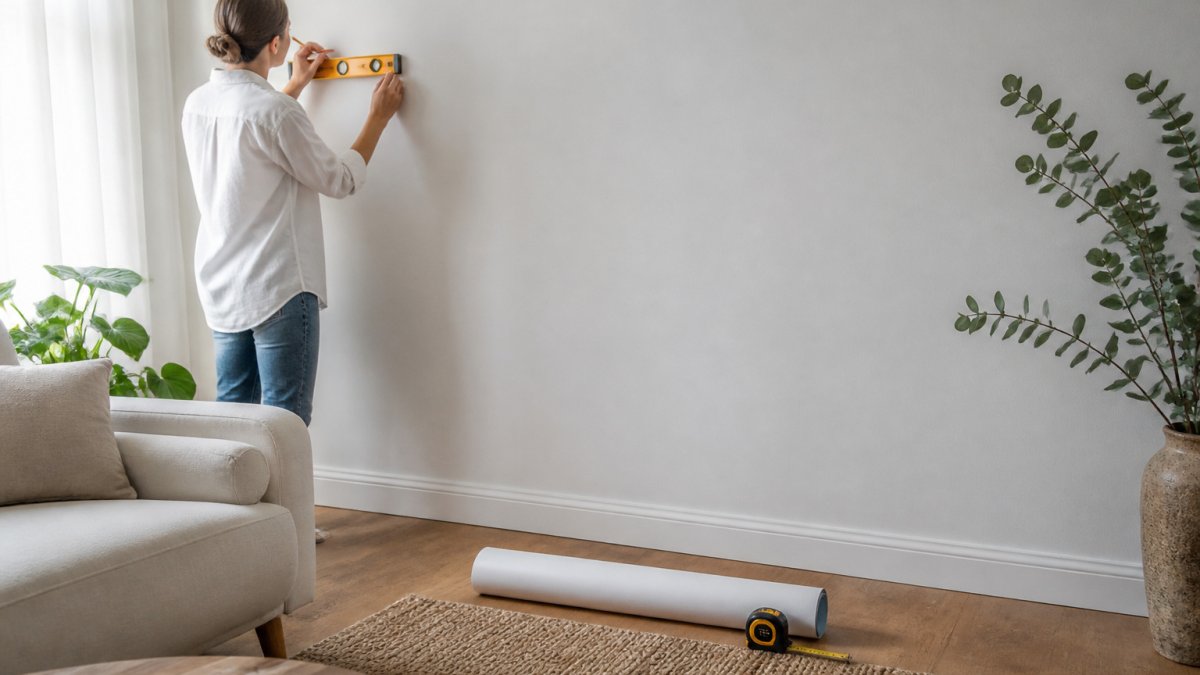
Marking the Wall and Checking Weight Limits
Hold the piece at the height you want. Mark the top corners lightly with a pencil. Measure the distance between the marks and the hanger on the back of the frame. Use the level to keep the marks straight.
Check the weight limit before you drill or stick anything. Add up the frame, the canvas, and any hardware. Choose a hook or anchor rated well above that total. A safety margin protects both the wall and the art.
Securing Heavier Pieces Safely
Heavier canvases need solid anchoring. If you can find a stud, screw directly into it. If you cannot, use a wall anchor rated for the load. Position two hooks on the wall to share the weight evenly. This also keeps the piece level.
Lilly Field Abstract Giclee Print →
Keep some space between the edge of the wall and the edge of a canvas print so the piece does not look crowded.
How to Arrange Wall Art: Spacing Multiple Floral Pieces
Arranging several floral pieces takes a little planning. Lay them on the floor first. Move them around until the spacing feels balanced. Then transfer the layout to the wall using painter's tape.
Keep gaps between frames roughly even. Two to three inches works well for a tight grouping. For a looser look, go wider. Stand back and check the arrangement from across the room before you commit.
- Start with the largest piece as the anchor
- Group smaller pieces around it
- Align the centers or the top edges for a clean line
When arranging multiple pieces, pairing one large statement floral with smaller textured works can keep the wall interesting without looking busy. For ideas on displaying textured pieces in a minimalist room, read Styling Textured Floral Art in Minimalist Homes.
Common Mistakes to Avoid When Hanging Floral Art
Most beginner problems come from a few avoidable habits. Skipping the level is the most common. Even a slight tilt shows up quickly on a large canvas.
Other mistakes include:
- Hanging art too high because it looks better "up there"
- Ignoring the weight rating on hooks and strips
- Crowding a wall with too many pieces at once
- Forgetting to check for wires or pipes before drilling
Take your time. A few extra minutes of checking saves you from patching holes later.
Booking Your Custom Floral Painting or Choosing a Print
If you want a piece made just for your space, you can commission a bespoke original painting by Emma Bell.
Not sure about the commission process? Read our guide on how to commission custom floral art for home to learn more about the commission process before you book.
For a ready-to-hang option, the Lilly Field Abstract Giclee Print is available in multiple sizes at $600.00. Its large format makes a strong statement on a blank wall. The largest size ships unstretched and rolled in a tube.

For a smaller option, the Summer Hush wrapped giclee print on canvas is priced at $200.00.

Explore the collection and find the piece that fits your room.
Frequently Asked Questions
How do you hang floral wall art?
Start by choosing your hardware and measuring the wall. Hang the piece so its center sits about 57 inches from the floor, then mark the spot with a pencil and a level. Install the hook or hanger at that mark, lift the art onto it, and check that it sits straight. For a beginner, a single wire hanger or D-ring hardware on the back of the frame is usually the simplest choice.
How do you hang wall art without damaging the wall?
Use adhesive hooks or removable strips rated above the weight of your piece, and follow the manufacturer's instructions for surface preparation and cure time. Choose strips that match the weight of your canvas, and avoid painted surfaces that are freshly coated. Adhesive options are a good fit for renters, though heavier pieces, such as a large gallery-wrapped canvas, may still need a traditional nail or screw anchored into a stud.
How high should floral wall art be hung?
A common guideline is to hang the center of the artwork about 57 inches from the floor, which approximates average eye level. Above a sofa, leave a gap of 6 to 8 inches between the top of the furniture and the bottom of the frame. Some designers suggest a range of 57 to 60 inches depending on the room's proportions, so adjust slightly if the piece is very large or the ceiling is unusually high.
How do you arrange multiple floral wall pieces?
Lay the pieces out on the floor first to test spacing and balance before you put any holes in the wall. Keep a consistent gap between frames, and avoid placing them too close to the edges of the wall. Designers often recommend pairing one large statement floral piece with simpler neutral décor so the arrangement feels balanced rather than crowded.
