
Table of Contents
- Why Commission Custom Floral Art for Home
- Step 1: Define Your Vision and Budget
- Step 2: Choose Your Artistic Style and Medium
- Step 3: Understand Palette Knife Painting Techniques for Beginners
- Step 4: Prepare Your Reference Photos and Details
- Step 5: Review the Commission Agreement and Timeline
- Step 6: Approve the Preview and Receive Your Artwork
- Caring for Your Commissioned Floral Painting
- Frequently Asked Questions
Last Updated: September 7, 2026
Commissioning custom floral art for home is a meaningful way to preserve a fleeting moment, whether it is a wedding bouquet, a garden in full bloom, or a gift that speaks for you. Unlike a print, a bespoke painting carries the artist's hand and the story of your space. At Emma Bell Fine Art, we create original palette knife and mixed media works designed to bring color and joy into your home, and this guide walks you through every step from first inquiry to hanging the finished piece.

Why Commission Custom Floral Art for Home
A commissioned painting anchors a room with texture, color, and personal meaning, preserving a specific memory such as the exact blush tones of your bridal bouquet or wildflowers from a favorite hike, a warmth mass-produced decor cannot replicate.
The real value lies in the collaboration. You are not buying a product off a shelf; you are working with an artist to capture a subject that matters to you, so the process prioritizes communication to ensure the final painting feels like yours.
Step 1: Define Your Vision and Budget
Before contacting an artist, decide what you want the painting to say and what you are willing to invest. Identify the room, mood, and existing color palette so the piece harmonizes with your furniture and wall tones.
Larger canvases, more complex compositions, and additional revisions influence the final price, a 20x20 inch commission on fine art paper is a different investment than a 40x40 inch gallery wrap canvas. Set a range and discuss options with the artist, who can recommend a size and medium that fits your vision.
Step 2: Choose Your Artistic Style and Medium
The medium you select dramatically changes the final aesthetic. Custom floral art can be rendered in watercolor, acrylic, or oil, but textured palette knife work offers a distinct sculptural quality that catches light and adds depth. Palette knife painting uses a blade to apply thick layers of paint, creating a raised, dimensional surface that feels modern and vibrant.

For a sleek, minimalist space, a softer abstract floral on archival paper might suit your aesthetic; for a traditional living room, a more detailed still life with classic brushwork could be the right fit. The choice also affects longevity, archival materials and gallery quality canvas ensure your investment endures for decades.
Step 3: Understand Palette Knife Painting Techniques for Beginners
You do not need to master palette knife painting techniques for beginners to commission a piece, but understanding the process helps set expectations. The technique applies paint directly onto the canvas with a knife, producing bold strokes and a rich, impasto texture. Because the paint is thick, drying time is longer and the artist works in layers.
This method is why the artwork feels alive, the texture catches shadows and highlights differently throughout the day. When you commission a hand-painted floral from an artist who uses this technique, you are paying for the physical depth and the skill required to control a tool that offers less precision but far more expression than a brush.
Step 4: Prepare Your Reference Photos and Details
Clear reference images are the foundation of a successful commission. Photograph your subject in natural light from multiple angles, capturing the overall shape and close-ups of individual blooms. For a custom wedding bouquet painting, include photos against different backgrounds so the artist can isolate the best color palette and composition.

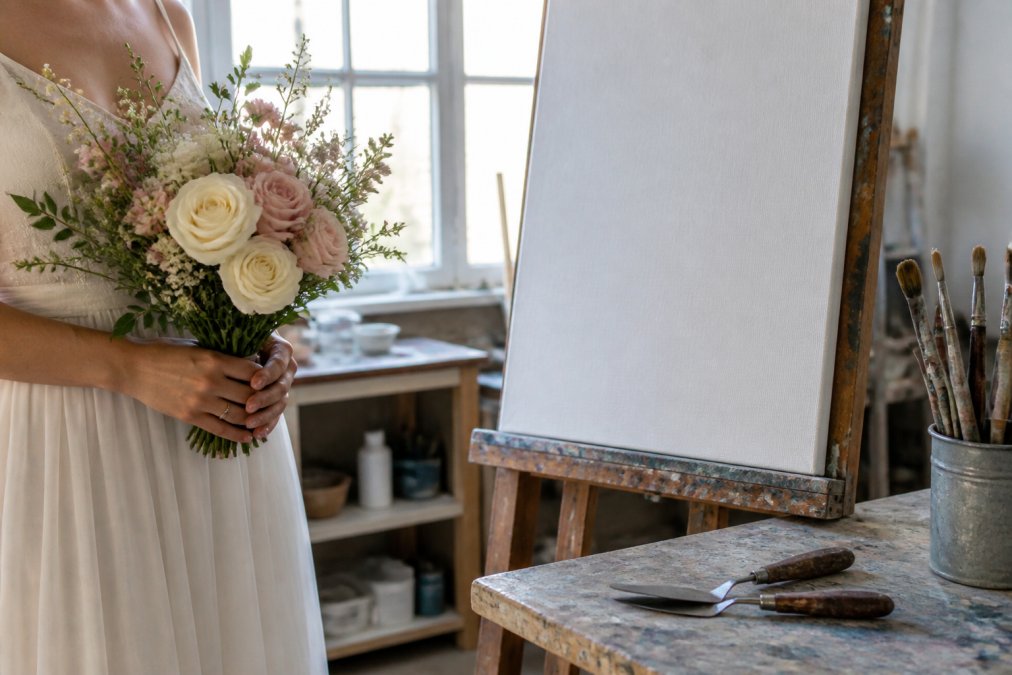
Beyond the photos, share the story behind the subject, the venue, the season, or why the flowers matter. Details like "the ranunculus were the first gift my husband gave me" help the artist prioritize which elements deserve the most attention. Specify any custom dimensions you need for a particular wall space.
Step 5: Review the Commission Agreement and Timeline
A professional artist will provide a commission agreement outlining the scope, price, and delivery schedule. This document protects both parties by clarifying the number of revisions, the deposit required, and the timeline for completion. Reviewing an art commission contract template helps you know what to look for, including cancellation policies and how the artist handles delays.
Lead times vary based on the artist's workload and the complexity of your piece. A standard floral commission might take several weeks from concept approval to completion, with larger canvases requiring more drying time between layers. Ask how the artist will share progress updates and what happens if you want a significant change after the preview is approved.
Legal and Copyright Considerations: What You Own vs. What the Artist Owns
Most commission guides stop at the deposit and timeline, but the legal side is where homeowners often get surprised. Under U.S. copyright law (17 U.S.C. § 101 et seq.), the artist automatically owns the copyright unless they sign a written transfer of rights (copyright.gov). When you commission a painting, you own the physical canvas, but the artist retains the right to reproduce that image in prints, on their website, or in social media portfolios unless your contract states otherwise.
Before you sign, ask your artist to clarify these points in writing:
- Reproduction rights: Will the artist use your commissioned bouquet painting in their portfolio or sell prints of it? If you want exclusive rights, you may need to pay a licensing fee or negotiate a separate agreement. A typical arrangement is that the artist retains the right to display the work in their portfolio and sell limited reproductions, while you own the original. For full exclusivity, expect to discuss a higher fee.
- Moral rights: Under the Visual Artists Rights Act (VARA), the artist retains the right to attribution and to prevent modification that would harm their reputation. You cannot alter the painting without the artist's consent, even after you own it.
- Commissioned work for private use: A painting of your wedding bouquet is a "work made for hire" only if it falls under specific categories defined by copyright law, which typically does not include paintings. Most floral commissions are not work-for-hire, so the artist's default copyright applies.
A common pattern among professional artists is a clause stating that the client receives a personal, non-commercial license to display the artwork in their home, while the artist retains all other rights. This is fair and standard, but you should see it in writing and understand it before paying your deposit.
What to Verify in Your Timeline and Delivery Clause
Beyond copyright, your agreement should specify the delivery timeline in concrete terms. Ask for a date range rather than a vague "several weeks." A reputable artist will commit to a window, such as "completion within 6-8 weeks from approved sketch," and state how they handle delays. Confirm whether the timeline includes shipping time or only studio production time. For a 30x40 inch canvas, expect extra drying time for oil-based paints, which can take weeks to cure fully. Clarify whether shipping cost is included or billed separately, and whether insurance against damage in transit is covered by the artist or is your responsibility.
By reviewing these legal and logistical details, you move from passive buyer to informed collaborator, ensuring your commissioned floral art is a joy to own, not a source of confusion later.
Step 6: Approve the Preview and Receive Your Artwork
Once the artist completes the initial painting, you will receive a digital preview for approval. This is your opportunity to request minor adjustments, such as intensifying a color or adding more texture to a specific petal. Trust the artist's eye on composition and brushwork, but speak up if the piece does not feel like the memory you wanted to preserve.
After you approve the final painting, the artist prepares the artwork for shipping. Most original paintings are sent with protective packaging, and larger pieces may require crating. International collectors should confirm shipping costs and insurance coverage before the piece leaves the studio.
Caring for Your Commissioned Floral Painting
Proper care keeps your textured painting vibrant for a lifetime. Hang the piece away from direct sunlight to prevent pigment fading, and avoid areas with high humidity, such as a bathroom without ventilation. Dust gently with a soft, dry brush; do not use water or cleaning solutions, which can damage the paint layers.
If you chose a gallery wrap canvas, the piece is ready to hang without a frame, though framing options can add a polished finish for more traditional interiors. For works on archival paper, professional framing under UV-protective glass preserves the color and prevents yellowing. With these simple habits, your commissioned floral art remains a cherished keepsake for years to come.
A Deeper Guide to Framing, Hanging, and Preservation
Most commission guides stop at "avoid direct sunlight," but the longevity of your investment depends on a few more specifics. Here is what collectors and conservators typically recommend for original floral art in a home environment.
Framing Decisions by Medium
- Oil and acrylic on canvas: A gallery wrap canvas (where the canvas wraps around the stretcher bars) is ready to hang without a frame. If you prefer a framed look, choose a float frame that leaves a small gap between the canvas and the frame, which prevents the frame from touching the painted surface. Avoid glass over oil or acrylic paintings, it can trap moisture and cause the paint to crack or yellow over time. If you must use glass for protection, ensure there is a spacer so the glass never touches the paint.
- Watercolor or gouache on paper: These works require a mat and glass. Use a professional framer who will mount the paper with acid-free, archival tape (never glue directly to the artwork). Choose UV-protective glass or acrylic (e.g., Optium Museum Acrylic) to block up to 99% of UV rays, which are the primary cause of pigment fading (loc.gov). The mat should be acid-free and at least 2 inches wide to keep the glass from touching the paper surface.
- Pastel or charcoal: These mediums are fragile and require glass with a mat that creates a deep gap between the artwork and the glass. Use a non-glare or anti-reflective glass to avoid distracting reflections.
Hanging Location and Environmental Controls
Where you hang the piece matters as much as how you frame it. Avoid exterior walls with temperature fluctuations, and keep the painting away from heating vents, fireplaces, and air conditioning units. The ideal environment is a stable 65-75°F with relative humidity between 40% and 55% (si.edu). Kitchens and bathrooms are risky due to steam and grease, which can settle on the paint surface and attract dust.
For hanging, use two wall hooks spaced apart (rather than a single wire) to distribute the weight evenly and prevent the canvas from warping over time. For a 20x20 inch canvas, two 20-pound-rated picture hooks are sufficient. For larger pieces (30x40 inches or more), use two 50-pound-rated hooks anchored into a wall stud or use heavy-duty drywall anchors.
Cleaning and Maintenance
Dust your painting every 2-3 months with a soft, natural-bristle brush (a clean, dry makeup brush works well) or a microfiber cloth. Brush gently in one direction, from top to bottom, to avoid pushing dust into textured impasto areas. Never use feather dusters, which can snag on raised paint, and never use liquid cleaner, even on the frame. If you notice a smudge or stain, contact a professional art conservator, do not attempt to wipe it yourself.
Long-Term Preservation Checks
Once a year, inspect the back of the canvas for signs of sagging, mildew, or insect activity. If the canvas feels loose, a professional framer can re-tension it. For works on paper, check the mat for discoloration (acid burn) and replace it every 10-15 years if you notice yellowing. These small checks prevent minor issues from becoming costly restorations.
By following these medium-specific care instructions, your commissioned floral art will remain as vivid and textured as the day it arrived, preserving the memory and beauty you commissioned it for.
Frequently Asked Questions
How much does it cost to commission custom floral art for home?
Pricing varies based on size and complexity. At Emma Bell Fine Art, a 20x20 inch custom wedding bouquet painting is $600 total, paid in two installments of $300 each. A larger 40x40 inch piece is $2,400 total, with a $1,200 deposit to start and the balance plus $250 packing and shipping due after you approve the final painting.
What information should I provide when commissioning a custom painting?
Share clear reference photos of your bouquet, space, or pet, plus your preferred color palette and artistic style. Mention the dimensions you need and any specific flowers or details that matter most. The more visual context you provide, like photos of your room's decor, the better the artist can create a piece that fits your home.
How long does the process of commissioning a custom painting take?
Lead times depend on the artist's current schedule and the complexity of the piece. After you place a deposit, the artist typically shares progress updates and a preview for approval before the final balance is due. Ask about the specific timeline when you first inquire so you know what to expect.
What is the 70/30 rule in art commissions?
The concept of a '70/30 rule' is sometimes discussed in art commissions to explain how an artist's materials, time, and business overhead contribute to the overall cost of an original piece compared to prints. This guideline isn't universal, so it's always best to review each artist's specific pricing structure.