
Table of Contents
- What Giant Canvas Prints Offer Your Space
- Understanding Canvas Print Sizes and Dimensions
- Creating Large Canvas Prints From Your Photos
- Gallery-Quality Finishes: Stretched, Rolled, and Framed Canvas
- How to Hang Large Canvas Art Securely
- Large Canvas Art for Your Living Room and Beyond
- Artwork Styles: Abstract, Landscape, and Nature Designs
- Shipping, Care, and Long-Term Preservation
- Frequently Asked Questions
Last Updated: October 20, 2026
What Giant Canvas Prints Offer Your Space
Giant canvas prints transform how a room feels. They command attention, add depth, and create visual focal points that smaller artwork simply cannot match.
Oversized wall art changes the way people experience their homes. A large canvas print doesn't just hang on a wall, it becomes part of the room's architecture. The texture, color, and scale work together to set the mood for an entire space.

Gallery-quality finishes make a real difference in how your canvas prints look over time. The right stretched canvas, proper framing, and quality materials ensure your investment stays vibrant for years.
Understanding Canvas Print Sizes and Dimensions
Standard oversized dimensions
When you're shopping for large canvas prints, understanding available sizes helps you make confident decisions. Common oversized dimensions include 24×36 inches, 30×40 inches, 36×48 inches, and larger custom options.
The jump from standard framed art to large canvas art is significant. A 24×36 print covers roughly 8.5 square feet of wall space. A 36×48 print nearly doubles that at 16 square feet.
Emma Bell Fine Art offers canvas prints in multiple dimensions, including pieces up to 36×48 inches wrapped on 1.5-inch deep canvas with edges printed to match. Hand-embellished versions are available upon request, adding texture and dimension that photographs alone cannot capture.

Measuring your wall space
Before ordering giant canvas prints, measure your wall carefully. Use a tape measure to find the width and height of your available space.
Consider the furniture below the canvas as well. A large canvas print above a sofa should be roughly two-thirds the width of the sofa for balanced proportions. If your sofa is 84 inches wide, aim for a canvas around 54-60 inches wide.
Take a step back and visualize the finished look. Walk around the room and view the wall from different angles and distances. This helps you understand how the canvas art will interact with your existing decor and room layout.
Creating Large Canvas Prints From Your Photos
Image resolution and file preparation
High-resolution images are essential for quality large canvas prints. When enlarging photos, use images with at least 300 dots per inch at your final print size. A photo that looks sharp on your phone may pixelate when printed at 36×48 inches.
Before submitting your image, check the file format. Most canvas print services accept JPG, PNG, and TIFF files. Ensure your image is in RGB color mode, not CMYK, for accurate color reproduction on canvas.
If your original photo needs adjustment, basic editing helps. Increase contrast slightly and ensure colors are vibrant without oversaturation. Clean, well-lit photographs produce the best giant canvas prints.
Choosing the right artwork style
Your photo choice shapes how the finished canvas feels in your space. Landscape images work beautifully at large scales, especially nature scenes with depth and detail. Abstract or impressionist-style compositions can create energy in a room. Portraits and personal photos become intimate focal points when printed large.
Consider your room's existing color palette. A large canvas print with warm tones complements earth-toned furniture and neutral walls. Cool blues and greens work well in spaces with contemporary or minimalist decor. The artwork should enhance your design, not compete with it.
Gallery-Quality Finishes: Stretched, Rolled, and Framed Canvas
Stretched canvas with gallery wrap edges
Stretched canvas is the most popular finish for giant canvas prints. The canvas wraps around wooden stretcher bars, creating a 1.5-inch deep profile that looks professional without requiring a frame. Gallery wrap edges mean the image continues around the sides of the canvas, eliminating visible white edges.
This finish works well for modern and contemporary spaces. The depth creates shadow lines that add visual interest, and the canvas texture brings dimension to the image.
Stretched canvas is ready to hang straight from the box. No framing required, no additional installation steps. The stretcher bars have hanging hardware pre-installed, making it straightforward to mount your canvas prints securely.
Rolled canvas and restretching options
For very large pieces, some suppliers ship giant canvas prints rolled rather than stretched. This reduces shipping costs and damage risk for oversized artwork. When your canvas arrives, you'll need to have it restretched by a local framer.
Restretching typically costs around $100, depending on the size and complexity. Many framers can complete the work within 1-2 weeks.
Rolled canvas gives you flexibility in how you finish the piece. You can choose your stretcher bar depth, add a frame if desired, or customize the edges to match your vision for the final canvas art.
Framed and unframed choices
Some large canvas prints come with frame options. A frame adds a polished, gallery-like finish and can protect the canvas edges. Wood frames range from simple black or white to ornate designs, and metal frames offer contemporary aesthetics.
Unframed giant canvas prints on stretched canvas offer a cleaner, more modern look. The focus stays on the artwork itself rather than the frame. This works especially well for abstract or impressionist pieces where the brushwork and texture are central to the design.
Choose framing based on your room's style and existing artwork. If you have other framed pieces, consistency matters. If your space is minimalist, unframed stretched canvas often feels more cohesive.
How to Hang Large Canvas Art Securely
Choosing the right hardware and anchors
Large canvas prints require proper hardware to hang safely. Standard picture hooks work for smaller pieces, but giant canvas prints need heavier-duty support. Use wall anchors rated for the weight of your canvas, or mount directly into wall studs for maximum security.
For drywall, toggle bolts or molly bolts hold heavier pieces better than plastic anchors. If your wall is plaster or brick, use concrete anchors or masonry fasteners.
Hanging hardware typically comes with stretched canvas. If it doesn't, purchase appropriate D-rings or sawtooth hangers from a hardware store. Never skimp on mounting hardware, a falling large canvas art piece risks damage to the artwork and your home.
Installation steps for different wall types
For drywall, locate studs using a stud finder if possible. Mark your hanging points, then drill pilot holes slightly smaller than your hardware. Insert anchors and attach the hanging hardware securely. Use a level to ensure your canvas prints hang straight.
If you're mounting into studs, the process is similar but more straightforward. Drill pilot holes, screw in the hardware, and hang your canvas. Studs provide the most secure mounting for giant canvas prints.
For plaster walls, use care to avoid cracking. Mark your holes, then carefully drill at low speed. Use plaster anchors designed for your wall thickness. Test the anchor before hanging your large canvas print to ensure it holds securely.
Large Canvas Art for Your Living Room and Beyond
Living rooms are ideal spaces for large canvas prints. Choose artwork that complements your furniture colors and reflects your personal style.
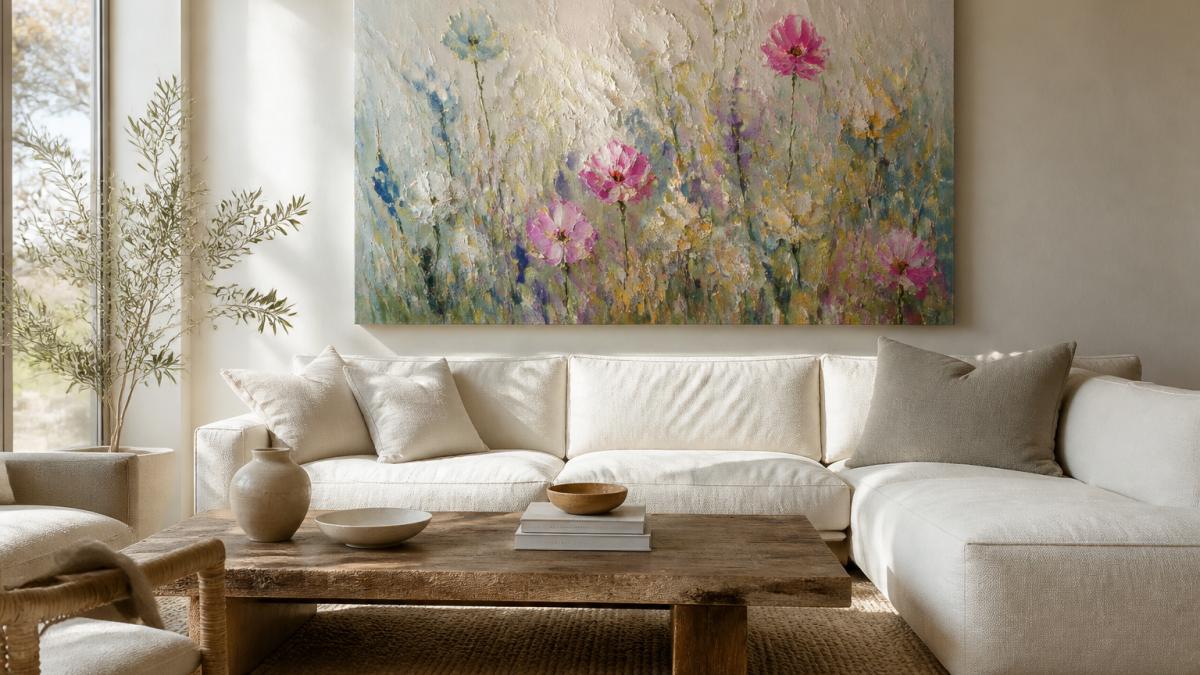
Bedrooms benefit from calmer, more intimate canvas art. Soft landscapes, abstract pieces with soothing colors, or personalized artwork create a restful atmosphere.
Home offices and studies gain energy from bold giant canvas prints. Abstract compositions, architectural imagery, or landscape scenes inspire creativity. The right artwork can transform a workspace into a place where you enjoy spending time.
Entryways make excellent locations for statement canvas prints. A large, eye-catching piece sets the tone as guests enter your home. It's often the first impression of your personal style and design sensibility.
Color and style matching your decor
Your canvas art should enhance your existing design, not clash with it. If your furniture is neutral, you have flexibility with bold, colorful artwork. If your space features jewel tones or patterns, consider large canvas prints in complementary or analogous color schemes.
Modern spaces pair well with abstract or geometric giant canvas prints. Contemporary homes benefit from minimalist or impressionist artwork. Traditional interiors work with landscape or classical-inspired pieces.
The texture of canvas itself adds warmth to any space. Even a simple color field or abstract composition gains dimension through the canvas medium. This tactile quality makes canvas prints feel more substantial than flat paper prints.
Artwork Styles: Abstract, Landscape, and Nature Designs
Modern and abstract compositions
Abstract canvas prints work in virtually any interior. They don't require viewers to recognize a specific subject, so they pair well with diverse decor styles. Bold color combinations create visual interest and energy in a space.
Modern abstract giant canvas prints often feature geometric shapes, dynamic brushwork, or layered compositions. These pieces work especially well as statement art in minimalist or contemporary spaces. The viewer's interpretation becomes part of the experience.
Emma Bell Fine Art creates abstract pieces like Summer Hush and Through the Willow, available as large canvas prints starting at $200. These works combine impressionist techniques with contemporary color palettes, creating pieces that feel both artistic and accessible.
Landscape and nature artwork
Landscape canvas prints bring the outdoors into your home. Forest scenes, coastal imagery, and mountain vistas create peaceful focal points. Large-scale landscape artwork transports viewers, making rooms feel more expansive.
Nature-inspired giant canvas prints work in bedrooms, living rooms, and offices. The calming effect of natural imagery reduces stress and creates a sense of tranquility. A large landscape piece can make a small room feel more open.
Sunset and water imagery are particularly popular for large canvas art. Warm tones in sunset pieces create inviting atmospheres, while cool blues in water scenes feel refreshing and serene. Consider your room's lighting and color scheme when choosing landscape canvas prints.
Shipping, Care, and Long-Term Preservation
Safe delivery of oversized prints
Shipping large artwork requires careful handling. Most giant canvas prints ship rolled in protective tubes to prevent damage during transit. This method protects the canvas surface and reduces shipping costs compared to flat-box shipping.
When your large canvas prints arrive, inspect the package for damage before signing. Check that the canvas itself isn't creased or dented. If you ordered a rolled canvas, have it restretched promptly to prevent permanent creasing.
Tracking your shipment helps you prepare for delivery. Some suppliers offer signature-required delivery for high-value canvas art. This ensures someone is home to receive and inspect your piece.
Cleaning and maintaining canvas surfaces
Canvas is surprisingly durable when properly cared for. Dust your giant canvas prints gently with a soft, dry cloth every few months.
Keep large canvas art away from direct sunlight, which fades colors over time. UV-protective glass or acrylic, if you frame your piece, helps minimize fading.
Avoid touching the canvas surface with bare hands, as oils can leave marks. If your canvas prints get dusty, use a soft brush or microfiber cloth.
Temperature and humidity fluctuations can affect canvas longevity.
Choosing the right giant canvas prints transforms your space into a gallery of personal meaning.
Frequently Asked Questions
How do I choose the right size for giant canvas prints?
Measure your wall space first, then follow the rule of thumb: the canvas should cover 60-75% of your wall width. For a 10-foot wide wall, a 6-8 foot canvas works well. Consider your room's scale, furniture placement, and viewing distance. A canvas that's too small gets lost; too large overwhelms the space. Sketch the dimensions on your wall with painter's tape before purchasing to visualize the final effect.
What image resolution do I need for large canvas prints from photos?
For high-quality results, use images at least 150 DPI (dots per inch) at your intended print size. A 36x48 inch canvas needs a minimum 5400x7200 pixel image. Original photography or high-resolution digital files work best. If your image is smaller, consider enlarging it using upscaling software, though quality may vary.
Are giant canvas prints suitable for small rooms?
Yes, but strategy matters. In smaller spaces, a single large canvas often works better than multiple smaller pieces, it anchors the room without cluttering walls. Choose lighter colors or minimalist designs to avoid making the space feel cramped. Hang the canvas at eye level and leave breathing room around it. A 24x36 inch canvas can work beautifully in a small bedroom or office, creating visual interest without overwhelming the environment.
What's the difference between stretched canvas and rolled canvas prints?
Stretched canvas comes wrapped around wooden stretcher bars, ready to hang immediately, no framing needed. Rolled canvas arrives flat and requires restretching by a professional framer, typically costing around $100. Stretched canvas is more convenient and ready to display. Both offer the same gallery-quality appearance once properly prepared.