
Table of Contents
- Modern Coastal Aesthetic vs Traditional Beach Decor: Key Differences
- Modern Coastal Color Palette: Soft, Muted, and Sophisticated
- Traditional Beach House Decor: Bold Colors and Nautical Motifs
- Coastal Decor Without Seashells: Modern Materials and Textures
- Mixing Modern and Traditional Coastal Styles: A Practical Framework
- Furniture and Finishes: Where Modern Coastal and Traditional Diverge
- Which Style Fits Your Home and Lifestyle
- Furniture and Finishes: Where Modern Coastal and Traditional Diverge
- Frequently Asked Questions
Last Updated: October 17, 2026
Modern Coastal Aesthetic vs Traditional Beach Decor: Key Differences
Traditional beach decor leans into the obvious: bright nautical colors, anchor motifs, rope accents, and the occasional decorative sailboat. Modern coastal strips away the literal references and keeps only the feeling, the calm, the light, the sense of being near water.
Choosing the wrong approach can make your space feel dated or sterile.
Here's what separates them: philosophy, color intensity, material choices, and how literally you reference the ocean. Understanding those differences helps you make a choice that actually works for your home.
The Core Philosophy
Modern coastal design starts with a principle: suggest the coast without depicting it. You capture the essence of coastal living, the light, the air, the calm, through restraint and curation.
Traditional beach house decor embraces the theme directly. Seashells, starfish, ship wheels, and sailboat art are intentional declarations that this space celebrates beach life.
Visual Approach and Restraint
Modern coastal relies on negative space and calm. Walls stay mostly bare, surfaces uncluttered, and each piece of decor earns its place. The result feels intentional rather than accumulated.
Traditional beach decor fills space more generously. Gallery walls of beach photography, collections of shells and coral, woven baskets stacked in corners, these aren't accidents.
Both approaches work. Modern coastal forgives a sparse room; traditional beach decor needs enough visual interest to feel intentional rather than empty.
Modern Coastal Color Palette: Soft, Muted, and Sophisticated
The modern coastal color palette is where the two styles diverge most visibly. Modern coastal uses soft, desaturated tones, sand, sea foam, driftwood, overcast skies, not the bright blues and reds of nautical flags.
Neutrals as the Foundation
White, cream, soft gray, and warm beige form the backbone of modern coastal interiors.
Weathered wood tones anchor the palette. Not honey-colored or golden oak, but pale, aged finishes that look like driftwood or sun-bleached timber. This wood appears in flooring, ceiling beams, or furniture frames.
The effect is calm and restful, and the palette works especially well in smaller or low-light rooms because soft tones reflect available light rather than absorbing it.
Accent Colors Inspired by Sea and Sky
Where modern coastal adds color, it does so deliberately. Soft aqua, muted sage, pale gray-blue, and warm taupe appear as accents in throw pillows, artwork, or a single accent wall, desaturated enough to read as sophisticated rather than playful.
Modern coastal accent colors come from actual coastal landscapes: the pale blue of a misty morning, the greenish-gray of sea glass, the soft gray of storm clouds, colors you'd see in nature, not on a nautical flag.
Traditional Beach House Decor: Bold Colors and Nautical Motifs
Traditional beach house decor doesn't hold back on color. Bright whites, navy blue, coral, turquoise, and sandy tones work together in saturated, energetic combinations.
Bright, Saturated Hues
Navy and white dominate traditional beach interiors, think Hamptons aesthetic or classic beach cottage, with coral, turquoise, and seafoam as secondary colors. A navy sofa, white trim, coral accents, and turquoise artwork read as cohesive because the palette is consistent.
Bright whites appear everywhere: trim, ceilings, and often walls. This creates high contrast with the deeper accent colors. The effect is cheerful, energetic, and unmistakably beachy.
Nautical Symbols and Beach-Themed Accents
This is where traditional beach decor embraces literal references: anchor motifs, rope details, ship wheels, and nautical stripes in textiles, wall art, and accessories, plus decorative sailboats, lighthouses, coastal wildlife, shells, starfish, and coral displayed openly.
These elements aren't subtle, but they're not meant to be. They're part of the charm. A traditional beach house says clearly: "We love the ocean, and we're celebrating that here."
Coastal Decor Without Seashells: Modern Materials and Textures
One of the clearest distinctions between modern coastal and traditional beach decor is how each handles natural materials and textures. Both use them, but for different reasons and in different ways.
Natural Fibers and Weathered Wood
Modern coastal treats natural materials as texture rather than decoration. Linen appears in upholstery and curtains; jute, sisal, and woven grasses show up in rugs and wall hangings, adding interest without screaming "beach theme."
Weathered wood is essential to modern coastal. Pale, aged finishes on furniture, shelving, or flooring look softened by salt air and sun, not artificially distressed.
Concrete, stone, and raw plaster also fit modern coastal interiors. These materials are natural, durable, and visually calm. They add texture without color.
Why Modern Coastal Skips the Shells
Modern coastal avoids decorative shells, starfish, and coral because they read as literal references to the beach, too on-the-nose for a philosophy built on suggestion and restraint. The palette, materials, and calm already make the coastal inspiration clear.
Instead, modern coastal uses abstract coastal artwork, think soft watercolor seascapes or textured paintings that suggest water and light without depicting recognizable scenes. This approach keeps the feeling without the literal decoration.

| Aspect | Modern Coastal | Traditional Beach |
|---|---|---|
| Primary colors | Soft white, cream, pale gray, muted blue | Bright white, navy, coral, turquoise |
| Accent approach | Desaturated, nature-inspired | Saturated, energetic |
| Nautical references | Minimal or abstract | Explicit (anchors, stripes, ships) |
| Shells and starfish | Avoided | Displayed and celebrated |
| Wood finishes | Pale, weathered, aged | Honey-toned or natural |
| Texture strategy | Subtle, layered | Collected, visible |
| Overall feeling | Calm, sophisticated | Cheerful, energetic |
Mixing Modern and Traditional Coastal Styles: A Practical Framework
Most homes don't need to choose exclusively. You can blend modern coastal's restraint with traditional beach decor's warmth and personality, the key is intentionality.
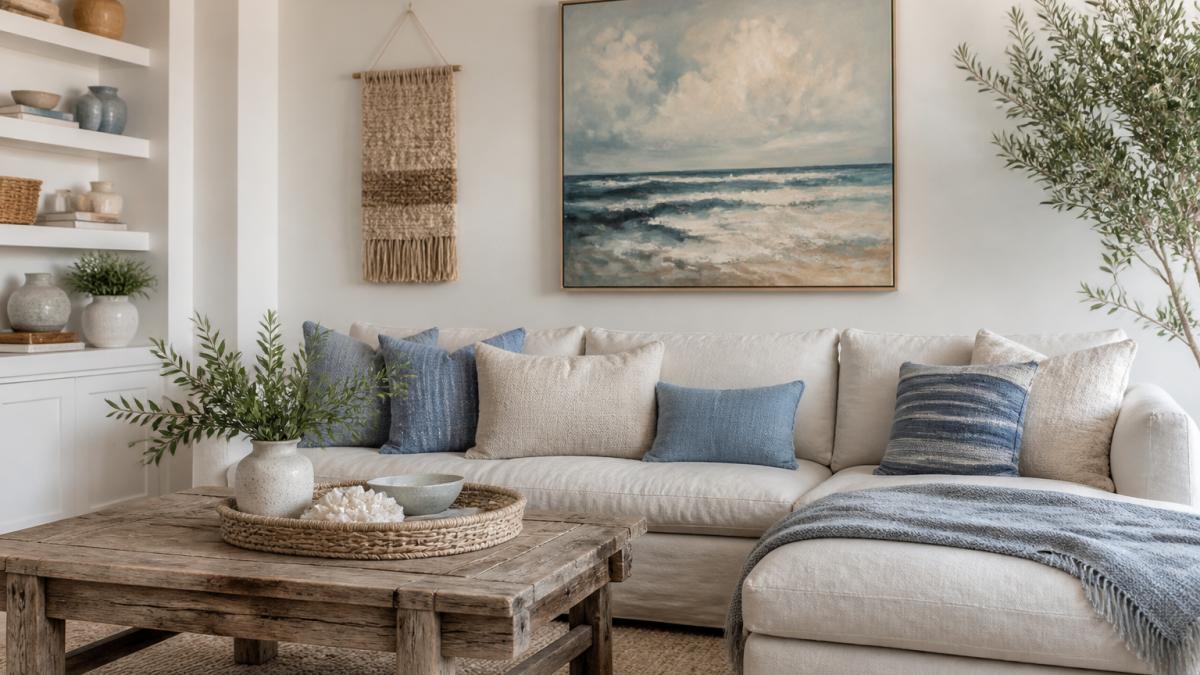
Start with Modern Coastal as Your Base
Build your foundation in modern coastal: neutral walls, soft palette, natural materials, and plenty of white or cream, a calm, sophisticated starting point that won't feel cluttered or dated.
From this base, you can layer in traditional beach elements without overwhelming the space. A few nautical accents, perhaps a rope-detail mirror or a striped throw, feel intentional rather than kitschy when they're surrounded by modern coastal restraint.
Layer in Selective Traditional Elements
Choose which traditional beach elements genuinely speak to you, then integrate them carefully. Love nautical stripes? Use a single throw pillow or small rug rather than wallpaper and upholstery. Love shells? Display a curated collection in one glass bowl rather than scattering them throughout.
The principle is curation. One or two traditional beach elements in a modern coastal room feel like deliberate choices. Too many feel like you couldn't decide on a style.
Room-by-Room Application
Different rooms can handle different ratios. A master bedroom might lean heavily modern coastal, soft, minimal, restful, while a guest bedroom or casual den can embrace more traditional elements. Kitchens and entryways can mix freely because these spaces forgive visual variety.
The living room is where most people struggle with the balance. If you're building a living room that blends both styles, anchor it in modern coastal (neutral walls, soft palette, natural materials) and add 2-3 traditional beach accents maximum.
Furniture and Finishes: Where Modern Coastal and Traditional Diverge
Furniture tells you immediately which direction a room is heading. Modern coastal furniture prioritizes clean lines and minimal ornamentation. Traditional beach furniture embraces casual, collected, sometimes mismatched pieces.
Modern Coastal Furniture: Clean Lines and Minimal Ornamentation
Modern coastal sofas are typically low-profile, with straight legs and simple silhouettes, upholstered in linen or a natural fiber in white, cream, or soft gray. The focus is form and material, not decoration.
Tables in modern coastal spaces have simple, often sculptural bases. Tops might be reclaimed wood, concrete, or glass.
Storage is minimal and hidden when possible. Open shelving appears in modern coastal, but it's carefully styled with only essential items visible. Clutter is the enemy.
Traditional Beach Decor Furniture: Casual and Collected
Traditional beach furniture is more eclectic: a vintage wicker chair beside a painted wooden table, upholstery in patterns, stripes, nautical prints, or beach-themed designs. Mismatched pieces suggest a home collected over time rather than designed all at once.
Storage is often visible and decorative. Woven baskets, wooden shelves displaying collected shells or beach finds, and open cabinetry are features, not problems. The room tells a story through its accumulated pieces.
Which Style Fits Your Home and Lifestyle
The choice between modern coastal and traditional beach decor isn't just aesthetic. It's about how you live and what you want your home to communicate.
Choose Modern Coastal If
You prefer calm, uncluttered spaces and want a coastal aesthetic without traditional beach decor's dated, themed feel. You want your home to feel sophisticated and intentional, have limited space, and prefer minimal decorative objects.
Modern coastal also works if you live in a home with limited natural light or smaller rooms. The soft palette and minimal approach make these spaces feel larger and brighter.
Choose Traditional Beach Decor If
You love color and visual interest, enjoy collecting shells, beach art, and coastal memorabilia, and want your home to immediately communicate that you love the beach. You're comfortable with a more eclectic, less "designed" aesthetic and want a space that feels warm, collected, and personal rather than curated.
Traditional beach decor also suits homes with plenty of natural light and larger rooms that can handle visual variety without feeling cramped.
Blend Both If
You want the sophistication of modern coastal with the personality of traditional beach decor. You have a home with distinct rooms where different styles can coexist. You're willing to be intentional about which traditional elements you incorporate and where.
The blend approach requires restraint. Don't try to do both equally in the same room. Instead, let one style dominate and use the other for accent and personality.
Furniture and Finishes: Where Modern Coastal and Traditional Diverge
The materials you choose reinforce your style.
Traditional beach decor embraces more visible texture and pattern. Striped or patterned upholstery, honey-toned or natural wood, rope details, and brass or nautical hardware are all fair game.
Choosing between modern coastal vs traditional beach decor comes down to how you want to feel in your space and what visual language resonates with you.
At Emma Bell Fine Art, we've found that the best coastal interiors often combine both approaches intentionally. If you're building a coastal-inspired home, consider starting with soft neutrals and natural materials, then layering in the coastal artwork and accents that genuinely speak to you. Pieces like Plenty of Time for Fishing, a palette knife original oil painting capturing the quiet beauty of a coastal landscape, work beautifully in either aesthetic because they suggest rather than declare.


Frequently Asked Questions
What is the difference between modern coastal and traditional beach decor?
Modern coastal design emphasizes muted, neutral palettes with subtle sea-inspired accents, clean-lined furniture, and natural textures like weathered wood and linen. Traditional beach decor features brighter, more saturated colors, nautical motifs like stripes and shells, and a collected, casual aesthetic. Modern coastal creates a sophisticated, relaxed atmosphere, while traditional beach decor is playful and overtly beach-themed.
Can you mix modern coastal and traditional beach decor together?
Yes. Start with modern coastal as your foundation using neutral walls, light-finished wood, and muted tones. Then layer in selective traditional elements like a striped throw pillow, a vintage anchor accent, or collected beach finds displayed sparingly. The key is restraint: one or two traditional pieces against a modern coastal backdrop creates balance rather than visual clutter.
What colors define modern coastal design?
Modern coastal color palettes center on soft, muted tones: whites, creams, warm beiges, and soft grays. Accents include pale blues, soft aqua, muted navy, and gentle seafoam. These colors are inspired by sand, sea, and sky but rendered in lower saturation than traditional beach colors. The overall effect is calming and sophisticated rather than bright or playful.
How do you decorate with coastal style without making a room look beachy?
Choose modern coastal design instead of traditional beach decor. Skip obvious nautical symbols like anchors, ship wheels, and shells. Focus on natural materials: weathered wood, linen, jute, and woven fibers. Use a muted color palette, minimal decor, and airy layouts. Add textured art like abstract seascapes instead of literal beach scenes. This approach brings coastal calm into your space without the overt beach-house aesthetic.