
Table of Contents
- Understanding Modern Interior Design and Art Selection
- Choosing Art to Match Room Colors and Establish Your Palette
- Modern Wall Art for Living Room: Style and Aesthetic Fit
- Art Size Guide for Walls: Proportion and Placement
- Matching Artwork to Furniture and Architectural Features
- Gallery Wall Layout Ideas: Creating Visual Balance
- Texture, Materials, and Practical Considerations
- Selecting Art That Reflects Your Personal Meaning
- Frequently Asked Questions
Last Updated: October 12, 2026
Understanding Modern Interior Design and Art Selection
Learning how to choose art for modern interiors means balancing aesthetics with your space's architecture and furnishings.
Modern interiors favor simplicity, geometric forms, and curation, not sterility. Every piece earns its place. When you choose art for modern interiors, you make a deliberate statement about how your space should feel.
At Emma Bell Fine Art, collectors who worried textured palette knife paintings wouldn't suit minimalist spaces found the opposite: texture adds dimension without clutter or competing patterns.
Choosing Art to Match Room Colors and Establish Your Palette
Your room's palette determines which artwork feels cohesive versus jarring. Identify your primary color, the dominant hue in furniture, walls, or flooring, then decide whether art should reinforce it or introduce complementary shades.
Complementary tones create balance: neutral walls with a navy sofa pair well with warm golds, corals, and terracottas, preventing a monochromatic feel.
The best strategy: choose artwork that bridges existing colors while introducing subtle new tones.
Modern Wall Art for Living Room: Style and Aesthetic Fit
Modern living rooms need artwork that respects the clean aesthetic while adding personality. As the largest, most visible space in your home, it sets the tone for your entire design approach.
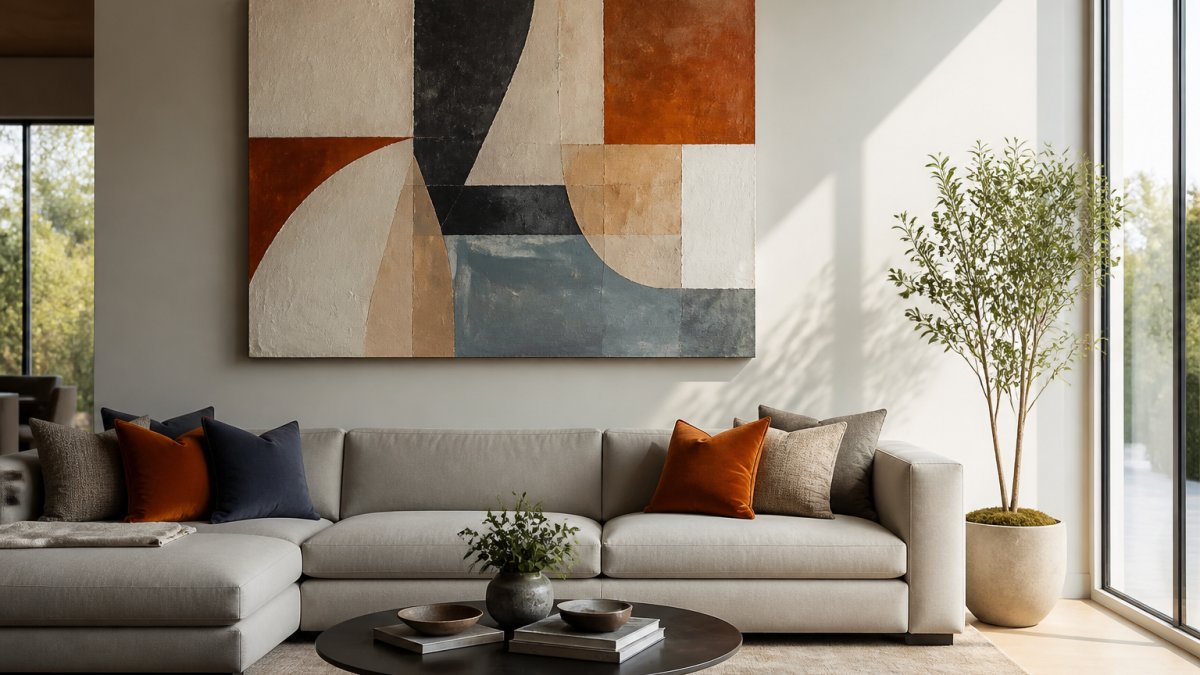
Minimalist and Contemporary Styles
Minimalist art emphasizes negative space, simple forms, and restrained palettes, bold geometric abstracts, monochromatic paintings, or a single dominant color with subtle variations. It suits living rooms with sparse furniture and uncluttered walls.

Contemporary art for modern interiors adds texture and movement while staying visually clear. Palette knife paintings, with thick paint creating dimensional surfaces, align perfectly, the texture catches light throughout the day, adding richness without pattern or visual noise.
Consider the scale of your wall and furniture.
Abstract and Geometric Approaches
Abstract artwork offers flexibility. Geometric abstracts, clean lines, defined shapes, intentional composition, feel at home in contemporary spaces.
Geometric patterns and bold lines create movement and energy. A painting dominated by diagonal lines draws the eye across the composition, ideal for living rooms you want to energize without clutter.
Understanding how to choose art for modern interiors through abstract work is interpretive: guests project their own meaning onto the piece, sparking conversation. It's also forgiving, complementing virtually any palette because you control which colors you emphasize.
Art Size Guide for Walls: Proportion and Placement
Scale is non-negotiable: too small disappears into the wall, too large overwhelms the space. The relationship between wall, furniture, and artwork determines whether a piece looks intentional or accidental.
Measuring Wall Space and Calculating Scale
Measure your wall in inches. Standard guidelines suggest artwork occupy 50-75% of the wall space above furniture, for an 84-inch sofa, aim for 42-63 inches wide. This creates balance without appearing timid or aggressive.
For a single large artwork, measure your furniture end to end and subtract 12-18 inches for comfortable margins. For multiple pieces, the combined width follows the same 50-75% rule.
Wall height matters equally. Artwork above a sofa should leave 8-12 inches of clearance, preventing the piece from pressing down on the room.
Hanging Height and Distance from Furniture
Hang the center of your artwork at approximately 57-60 inches from the floor, standard museum height and roughly eye level for a standing person, creating comfortable viewing.
Above a sofa, measure from the top of the sofa back and leave 8-12 inches between it and the frame's bottom edge, creating visual separation so the piece doesn't appear to sit on the furniture.
For gallery walls, maintain consistent 2-3 inch spacing between frames, cohesion reads as intentional, while random spacing looks accidental.
| Furniture Type | Recommended Width | Ideal Height Above Furniture | Clearance |
|---|---|---|---|
| Standard sofa (84") | 42-63" | 57-60" from floor | 8-12" |
| Console table (48") | 24-36" | 60" from floor | 6-8" |
| Bed (queen, 60") | 30-45" | 60" from floor | 12-18" |
| Entryway wall | 24-48" | 60" from floor | Varies |
Matching Artwork to Furniture and Architectural Features
Your artwork must dialogue with your furniture, flooring, and architecture. Modern interiors succeed when every element reinforces the overall design narrative.
Consider your sofa's style and material.
Architectural features, exposed brick, wooden beams, stone accents, influence selection. Textured artwork complements textured architecture; smooth, minimalist pieces offer calm contrast against busy elements.
Color coordination extends beyond your primary palette. Notice undertones in wood furniture, metal fixtures, and flooring: warm-toned wood pairs with warm-undertone artwork, cool metals with cooler pieces.
Gallery Wall Layout Ideas: Creating Visual Balance
Gallery walls display multiple pieces while maintaining modern principles. The key is intentional composition, not random arrangement.
Grid and Salon-Style Arrangements
A grid layout, frames evenly spaced in rows and columns, feels inherently modern and works best with similarly-sized frames. Measure carefully for consistent 2-3 inch spacing.
Salon-style arrangements layer varying sizes into a cohesive composition, feeling curated and personal. Sketch your layout on paper first, measuring distances and negative space. They work when pieces share a common theme, color family, subject matter, or style.
Layering and Composition Techniques
Layering involves varying frame styles, sizes, and mediums (paintings, prints, photographs) while keeping a consistent palette. Abstract pieces in blues and grays with mixed frame finishes (white, natural wood, black) create interest without chaos.
Create focal points and lead the eye: a larger off-center piece can anchor the wall with smaller works around it, or repeat a visual element, a geometric shape or color, across pieces to build rhythm.
Negative space is as important as the artwork itself. Modern design celebrates emptiness; don't feel obligated to fill every inch of wall.
Texture, Materials, and Practical Considerations
Original Paintings vs. Prints and Framing Options
Original paintings offer unmatched presence and dimension.
Prints offer accessibility and flexibility. High-quality giclee prints, printed on canvas or archival paper, capture the original artwork's color and detail while remaining affordable.
Framing influences how artwork integrates into your space. Modern frames typically favor clean lines and minimal ornamentation. Natural wood, matte black, or white frames suit contemporary aesthetics.
Emma Bell Fine Art offers both original paintings and high-quality prints, including hand-embellished canvas prints that bridge the gap between originals and standard prints.
Lighting, Glare, and Artwork Protection
Lighting dramatically affects how artwork appears. Natural light changes throughout the day, revealing different qualities of color and texture.
Artificial lighting should be warm and directional. Picture lights mounted above framed artwork create gallery-like presentation while reducing glare.
Glare occurs when light reflects off glass or glossy surfaces. If you frame artwork under glass, use non-reflective or anti-glare glass to minimize this effect.
Protect artwork from environmental damage. Avoid hanging pieces in direct sunlight, near heating vents, or in high-humidity areas like bathrooms.
Selecting Art That Reflects Your Personal Meaning
The most successful artwork in modern interiors connects emotionally with the people living in the space.
Consider what draws you emotionally. Do you gravitate toward nature, abstraction, specific color families, or particular moods?
Many collectors commission custom artwork to capture meaningful moments. A coastal landscape captures a place that resonates with your spirit.

Choosing artwork for modern interiors is ultimately about creating a space that feels authentically yours.
Emma Bell Fine Art specializes in original floral and coastal paintings created with palette knife and mixed media techniques that bring texture and dimension to modern spaces. Whether you're drawn to abstract florals, serene seascapes, or custom commissions capturing your personal moments, our work is designed to transform your environment into one that inspires and delights. Shop New Releases to explore pieces that speak to your vision.
Frequently Asked Questions
How do you choose art for a modern interior?
Start by assessing your room's color palette, lighting, and architectural style. Select artwork that complements your existing furniture and wall colors rather than clashing with them. Consider the scale of your walls and the visual balance you want to create. Modern interiors benefit from art that either echoes your room's color scheme or introduces a bold accent color intentionally. Think about whether you prefer minimalist, geometric, or abstract styles, and choose pieces that reinforce your home's overall aesthetic.
What size artwork should I choose for my walls?
A common rule is to fill 50-75% of wall space above furniture with artwork. For a sofa, the art should be 12-18 inches shorter than the furniture width. Measure your wall first, then select art proportionally. Above a 6-foot sofa, a 48-inch-wide piece or multiple smaller pieces arranged together work well. Leave 8-12 inches of negative space around the artwork to avoid a cramped appearance. Larger walls can accommodate bigger statement pieces, while smaller rooms benefit from appropriately scaled art that doesn't overwhelm the space.
Should art match the colors in your room?
Art doesn't have to match exactly, but it should coordinate with your room's palette. Choose colors that either complement your existing scheme or introduce an intentional accent color that ties to other decor elements like pillows, rugs, or architectural features. If your room uses cool tones (blues, grays), warm artwork (oranges, golds) creates visual interest. Alternatively, echoing your room's primary color in the artwork creates cohesion. The key is intentional coordination rather than random selection.
How high should I hang art above furniture?
Hang artwork 8-12 inches above the back of furniture like sofas or consoles. The center of the artwork should sit at eye level, typically 57-60 inches from the floor. This creates visual balance and makes the art feel connected to the furniture rather than floating on the wall. For gallery walls, maintain consistent spacing between pieces (2-3 inches) and treat the arrangement as a unified composition. Adjust these guidelines slightly for ceilings higher or lower than standard 8-foot heights.
Can you mix different art styles in one room?
Yes, you can mix styles if they share a common thread. Pair abstract and geometric pieces if they use a similar color palette or aesthetic approach. Modern interiors often blend minimalist line drawings with textured paintings or bold abstract work. The key is visual cohesion through color, scale, and framing consistency. Avoid mixing too many competing styles in a small space. In larger rooms or gallery walls, you have more flexibility to layer different approaches while maintaining balance through thoughtful placement and spacing.
What makes original paintings different from prints for modern interiors?
Original paintings offer texture, depth, and uniqueness that prints cannot replicate. Pieces created with palette knife or mixed media techniques add dimensional interest and catch light differently throughout the day. Original works provide emotional resonance. Fine art prints, available in multiple sizes and formats like canvas wraps, offer accessibility and flexibility for various budgets. Both can work beautifully in modern spaces; the choice depends on your budget, personal connection to the piece, and whether you prioritize texture and originality or affordability and variety.
How do I arrange a gallery wall in a modern interior?
Start with a focal point piece, then build around it using consistent spacing of 2-3 inches between frames. Grid arrangements work well for modern aesthetics, creating clean lines and visual order. Alternatively, salon-style layouts with varied frame sizes and orientations add personality while maintaining cohesion through matching frames or coordinated colors. Lay out your arrangement on the floor first before hanging. Keep negative space balanced and ensure the overall composition feels intentional. Modern gallery walls often benefit from matching frames and coordinated artwork that shares a color palette or theme.
How does lighting affect artwork in modern interiors?
Proper lighting enhances artwork and protects it from damage. Position art away from direct sunlight to prevent fading and color shifts over time. Use accent lighting like picture lights or wall sconces to highlight artwork and create ambiance. Avoid placing art opposite windows where glare can obscure the piece. Textured artwork like palette knife paintings shows depth best with side or angled lighting. Consider UV-protective glass or acrylic for valuable pieces near windows. Good lighting transforms how artwork appears throughout the day and protects your investment from environmental damage.