
Table of Contents
- Wedding Bouquet Painting Price Guide: What to Expect at Every Size
- Choosing the Right Medium for Your Floral Art Commission
- How to Commission a Custom Floral Painting From Photo
- Wedding Bouquet Preservation Ideas Beyond the Canvas
- Physical vs. Digital: Which Preservation Method Fits Your Style?
- Caring for Your Original Artwork and Choosing Framing
- Conclusion: Start Your Custom Wedding Bouquet Painting
- Frequently Asked Questions
Your wedding bouquet is the one element of the day you carried through every vow, photograph, and celebration. A custom wedding bouquet painting service online turns that fleeting arrangement into permanent, heirloom-quality artwork. Unlike pressed flowers that fade or a dress sealed in a box, a hand-painted canvas brings the color and emotion of your wedding day into your daily living space.
At Emma Bell Fine Art, couples commission these pieces for reasons beyond decoration. The bouquet often represents hours of planning and personal meaning, from a grandmother’s brooch tied to the stems to a bloom honoring a lost loved one. Original artwork captures those details with an artistic interpretation photographs cannot match.
This guide walks you through pricing, mediums, the commission process, and preservation alternatives, plus how to photograph your bouquet for the best results.
Wedding Bouquet Painting Price Guide: What to Expect at Every Size
Wedding bouquet painting prices scale primarily with canvas size, since larger works require more paint, time, and material.
Emma Bell Fine Art structures commissions transparently with a 50% deposit to begin and the balance due upon your approval of the final painting. Here is the current pricing guide for original floral art commissions:

| Canvas Size | Total Price | Deposit (50%) | Shipping |
|---|---|---|---|
| 12x12 inches | $150 | $75 | $20 |
| 20x20 inches | $600 | $300 | Free |
| 24x30 inches | $750 | $375 | $50 |
| 40x40 inches | $2,400 | $1,200 | $250 |
Most couples find a 20x20 or 24x30 inch canvas strikes the ideal balance between presence and price for a living room or bedroom wall. The 12x12 size makes a meaningful anniversary gift or a subtle gallery wall addition. For a true focal point, the 40x40 inch statement piece anchors an entire room.
Choosing the Right Medium for Your Floral Art Commission
The medium you select determines the entire mood of your finished keepsake artwork. Textured oils and acrylics deliver bold dimension, while watercolor and gouache offer soft, romantic delicacy. There is no wrong answer, only the choice that best reflects your wedding aesthetic and home decor.
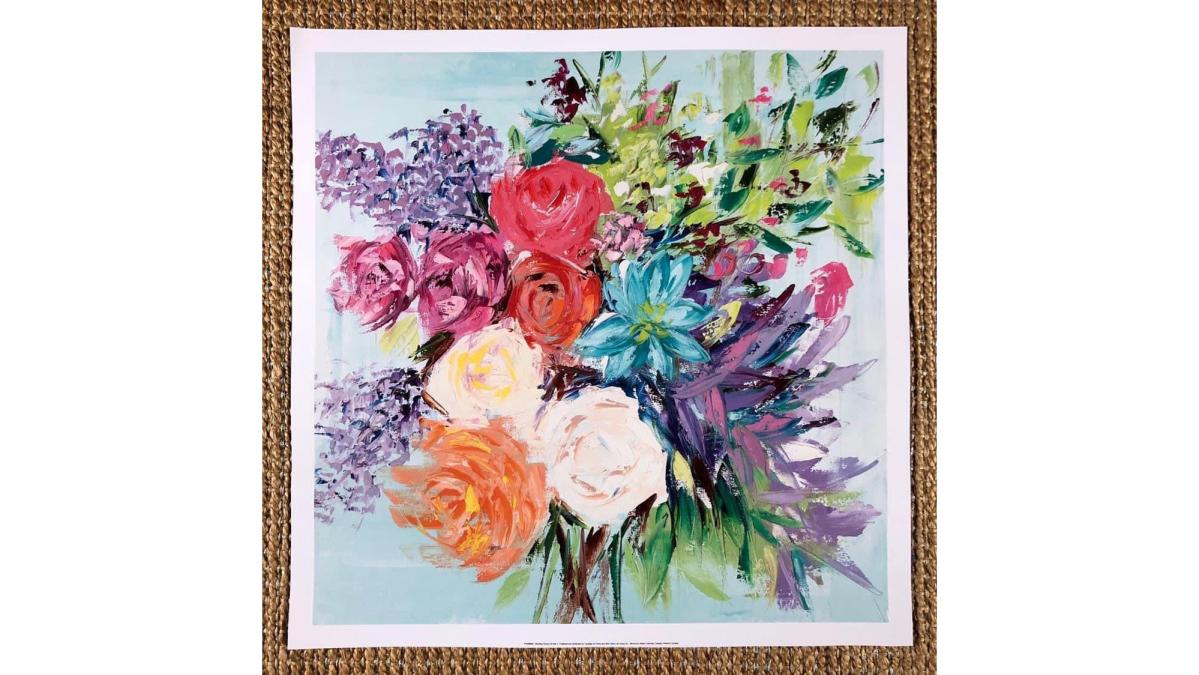
Acrylic and Palette Knife Textures
For couples who love modern, sculptural art, acrylic applied with a palette knife creates raised peaks of vibrant colors that catch light throughout the day. This technique produces a textured canvas where each petal has physical depth. Emma Bell Fine Art specializes in this mixed media approach, building layers of paint that give the bouquet a contemporary, abstract energy.
This style suits interiors with clean lines and minimalist furniture, adding warmth and organic movement without clashing. The tactile surface invites touch, making the painting feel alive and connected to the natural flowers it depicts.
Watercolor and Gouache Illustrations
If your wedding theme leaned romantic and ethereal, watercolor delivers translucent washes and delicate edges that feel like a memory. Gouache, a close cousin, offers more opacity for precise botanical illustration and vibrant colors while maintaining a flat, elegant finish. These mediums are ideal for fine art paper, creating a lighter, more traditional look that pairs beautifully with vintage or cottage-core interiors.
How to Commission a Custom Floral Painting From Photo
Commissioning a custom floral painting from photo is collaborative but designed to require minimal effort on your part. The artist handles the creative interpretation; your role is to provide clear visual references and communicate your style preferences. A typical commission moves from deposit to delivery in a few weeks, depending on canvas size and the artist’s current workload.
Photographing Your Bouquet for the Best Results
The quality of your reference photo is the single biggest factor in a successful painting. A common mistake is relying on professional wedding photos where the bouquet is a small detail in a wide shot. Instead, take dedicated close-ups of the bouquet on your wedding morning.
Capture the bouquet from multiple angles: straight on, at a 45-degree angle to show depth, and a tight shot of individual blooms. Use natural, diffused light by standing near a window, and avoid direct flash which flattens vibrant colors. Include a shot against a neutral background so the artist can see its true shape and structure without visual noise.
The Commission Process: From Deposit to Delivery
The process is straightforward. After you place a 50% deposit for your chosen canvas size, the artist reviews your reference photos and any notes on color palette or style. You do not need to be involved in constant back-and-forth; the artist works independently to create the painting.
Once the piece is complete, you receive a photo for approval. This is your opportunity to request any adjustments before the final balance is paid. After your approval, the remaining balance is invoiced, and the original artwork is carefully packed and shipped to your door.

Wedding Bouquet Preservation Ideas Beyond the Canvas
A painted commission is a beautiful centerpiece, but it is not the only way to honor your bouquet. To make the right choice, weigh the trade-offs between cost, longevity, and the sensory experience you want to preserve. Here’s how the most common methods stack up against an original painting.
Pressed Flowers in a Frame
This is the most accessible DIY option, often costing under $50 in materials. You press the blooms between heavy books for two to three weeks, then arrange them in a shadow box. The critical trade-off is color fidelity: most flowers, especially white and pastel varieties, oxidize and turn brown or yellow within a year, regardless of how carefully you seal the frame. The result is a sentimental, textural artifact, but it rarely matches the vibrant arrangement you carried.
Resin Preservation
Resin encapsulation is popular for preserving individual blooms, often transforming them into jewelry or paperweights. A professional service typically charges $100 to $300 per piece. The flower is dried using silica gel, then submerged in a clear epoxy resin that hardens into a solid block. The risk is that drying can make petals brittle, and the resin’s heat during curing can shift delicate colors. It is an excellent choice for a single boutonniere or a few meaningful stems, but it is not suited for displaying the entire bouquet’s shape and volume.
Professional Photography and Digital Archiving
Your wedding photographer already captures high-resolution images of the bouquet. For $50 to $150, you can purchase the digital files and have them printed on archival paper or canvas. This is the most cost-effective way to share the image with family. The limitation is that a photograph is a flat reproduction; it lacks the physical texture and painterly interpretation that makes an original artwork feel unique. It also depends entirely on the quality of the photographer’s lighting and composition, which you cannot control after the fact.
The Decision Framework: What Do You Want to Feel?
A practical way to decide is to ask what you want to experience when you look at the piece in ten years. If you want the exact, literal appearance of the flowers, a professional photograph is the most accurate. If you want the tactile, dimensional presence of the bouquet itself, pressing or resin preserves the physical material but sacrifices color. If you want the emotional essence of the day, the color palette, the movement, the style, filtered through an artist’s eye, a custom painting is the only method that offers that interpretive layer.
For those who want both, a common approach is to commission a painting for your primary living space and order a signed archival print of that same painting to gift to your parents or bridal party. This gives you the heirloom original and the shareable copies without compromising on quality.
Physical vs. Digital: Which Preservation Method Fits Your Style?
Choosing between a physical painting and digital preservation comes down to how you want to experience the memory. Digital scans and high-resolution photographs are perfect for sharing on social media and storing in cloud albums, but they remain trapped behind a screen. A physical painting, by contrast, becomes part of your home’s daily atmosphere.
Original artwork also increases in sentimental value as the years pass. It is not a file you might lose to a hard drive failure, but a tangible object that can be passed down. For couples who value heirloom quality and the warmth of textured, hand-painted art, a physical commission is the superior choice. This sentiment is echoed by collectors who understand that original art holds its value differently than reproductions, serving as both a memory and an investment.
Caring for Your Original Artwork and Choosing Framing
Proper care ensures your custom wedding bouquet painting retains its vibrant colors for generations. The two biggest threats to any original artwork are ultraviolet (UV) light and humidity. Here is a practical, room-by-room guide to protecting your investment.
UV Protection and Placement
Direct sunlight is the primary cause of pigment fading in both acrylic and watercolor paintings. Even indirect sunlight through a window can cause noticeable fading over a decade. The safest approach is to hang the painting on a wall that does not receive direct sun exposure at any point during the day. If you must hang it in a bright room, consider using UV-filtering glass or acrylic glazing if the piece is framed. For canvas paintings without glass, a UV-protective varnish applied by the artist adds a sacrificial layer that absorbs UV radiation before it reaches the paint. Ask your artist if they use a professional-grade varnish with UV inhibitors, such as those from Golden or Liquitex.
Humidity and Temperature Control
Extreme fluctuations in humidity cause canvas to expand and contract, which can lead to cracking in the paint film over time. The ideal environment is a stable room temperature between 65°F and 75°F with relative humidity between 40% and 55% (si.edu). Kitchens and bathrooms are the worst locations because steam and cooking grease can settle on the paint surface. Bedrooms and living rooms are typically safe. If you live in a humid climate, a dehumidifier in the room is a worthwhile investment.

Cleaning and Handling
Never use water, glass cleaner, or any chemical spray on an original painting. These liquids can seep into the paint layers and cause discoloration or delamination. The only safe method is to dust the surface gently with a soft, dry microfiber cloth or a wide, soft-bristle brush. For textured palette knife paintings, use a compressed air duster to remove dust from the crevices without applying pressure that could flatten the raised peaks.
Framing Decisions by Medium
- Textured Acrylic on Canvas: This medium does not require glass. A floating frame, where the canvas sits slightly recessed behind a visible edge, is the modern standard. It protects the edges from scuffs while leaving the textured surface fully exposed.
- Watercolor or Gouache on Paper: These must be framed behind glass to protect the delicate paper surface from moisture and airborne pollutants. Use a mat (also called a matte) to create a gap between the paper and the glass; this prevents condensation from touching the artwork. Choose a mat made from 100% cotton rag or acid-free museum board to prevent yellowing.
- Giclée Prints: If you ordered a signed print of your painting, treat it like a watercolor. Frame it behind UV-filtering glass with an acid-free mat. The print itself is archival, but the framing materials determine whether it stays that way.
A Note on Insurance and Appraisal
If your commission is a significant investment, consider adding it to your homeowners or renters insurance policy as a scheduled personal property item. A professional appraisal from a certified art appraiser can document the piece’s value for insurance purposes. Most insurers require an appraisal for items valued above $1,000 (iii.org). This is a step most artist portfolio sites never mention, but it is the mark of a truly informed buyer.
Conclusion: Start Your Custom Wedding Bouquet Painting
Commissioning a custom wedding bouquet painting service online is an investment in how you remember one of the most important days of your life. It transforms a fleeting arrangement into a permanent source of color, texture, and joy in your home. Whether you choose a textured acrylic statement piece or a delicate watercolor illustration, the result is a unique conversation starter that no other couple will own.
Emma Bell Fine Art specializes in palette knife and mixed media techniques that capture the vibrant, sculptural essence of wedding flowers. With clear pricing, a simple deposit structure, and free shipping on popular sizes, starting your commission is straightforward. Get started with Emma Bell Fine Art and turn your wedding bouquet into a blissful, inspiring work of art.
Frequently Asked Questions
How much does a custom wedding bouquet painting cost?
Prices vary by size. At Emma Bell Fine Art, a 12x12 bouquet commission is $150 plus $20 shipping. A 20x20 painting is $600 with free shipping, while a larger 24x30 piece is $750 plus $50 for packing and shipping. The most substantial option, a 40x40 statement canvas, totals $2,400 with shipping invoiced after you approve the final artwork.
Can an artist paint my bouquet from a photograph?
Yes, painting from a reference photo is the most common way to commission a custom floral painting from photo. To get the best results, photograph your bouquet in natural daylight against a simple background. Capture close-ups of the blooms and the full arrangement, including the stems and ribbon. These images give the artist the detail needed to create a keepsake artwork that truly represents your wedding flowers.
How long does it take to receive a custom wedding bouquet painting?
Turnaround times vary between artists and depend on their current commission schedule. You will typically receive a proof or progress image for approval before the final balance is due. For larger pieces that require more drying time for texture, the process can take longer. It is best to ask the artist for their current timeline before you place a deposit.
What is the difference between a watercolor and an oil or acrylic bouquet painting?
Watercolor paintings offer a soft, delicate look with translucent layers of color, which suits romantic and minimalist interiors. Acrylic or oil paintings, especially those done with a palette knife, create bold texture and dimension. This style adds a sculptural, vibrant quality and makes the blooms feel almost lifelike, acting as a statement piece in a modern home.
What are the best wedding bouquet preservation ideas?
Beyond commissioning a hand-painted portrait, you can preserve your bouquet by pressing the flowers in a frame, drying them in silica gel to keep their shape, or having them set in resin jewelry. For a lasting keepsake piece that captures the color and vibrancy of the arrangement, a custom painting on fine art paper or a textured canvas is a popular alternative to traditional drying methods.