
Table of Contents
- Why Mixed Media Floral Paintings Transform a Room
- Creative Freedom and Versatility in Mixed Media Floral Art
- How Texture and Layering Build Visual Depth
- Palette Knife Painting Techniques for Beginners
- Mixed Media Art Supplies for Beginners
- Abstract or Realistic: Choosing Your Floral Style
- The Emotional Payoff: Stress Reduction and Self-Expression
- Archival Quality, Framing, and Display Challenges
- Frequently Asked Questions
Last Updated: September 22, 2026
Why Mixed Media Floral Paintings Transform a Room
Walk into a room anchored by a mixed media floral painting and something shifts before you can name it. The wall stops being a wall. According to the American Psychological Association's research on art and wellbeing, viewing visual art engages the brain's reward system in ways that flat decoration simply cannot match. This guide from Emma Bell Fine Art covers why these works command attention, how they're made, and what to weigh before you buy one.

Texture You Can See Across the Room
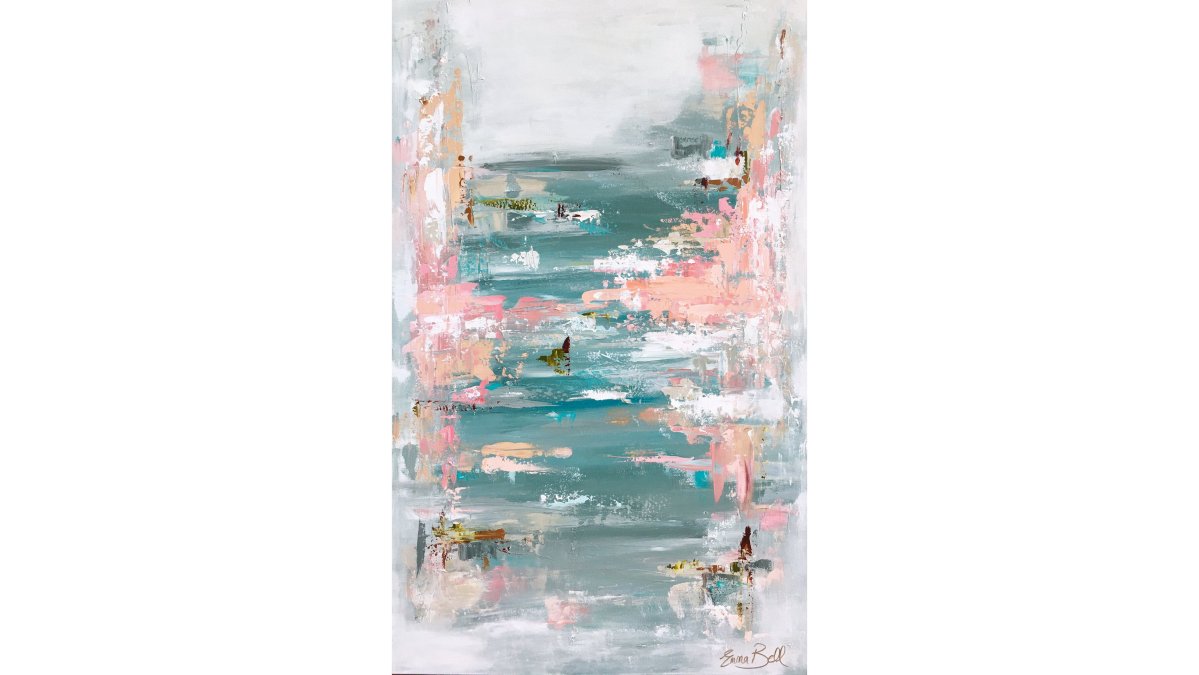
Flat prints disappear into a wall. A palette knife painting refuses to. Raised ridges of acrylic catch window light and throw soft shadows that shift as the sun moves, giving a single canvas the presence of sculpture. That physical relief is why a textured floral piece reads as an object, not a picture.
Color That Changes With the Light
Morning light warms a muted floral into gold. Evening lamplight pulls the same canvas toward cooler, quieter tones. A mixed media floral painting behaves differently at different hours because its surface is uneven, scattering light at angles a flat print never will. One painting, several moods, no redecorating required.
Creative Freedom and Versatility in Mixed Media Floral Art
Mixed media floral art is the practice of combining two or more materials, such as acrylics, watercolors, graphite, inks, and collage elements, within a single floral composition. That definition matters because it explains the genre's defining trait: versatility. An artist can move between opaque impasto and translucent washes in the same piece, letting one flower sit heavy and sculptural while another dissolves into stained color.
How Texture and Layering Build Visual Depth
Depth in a mixed media floral comes from layering, not perspective tricks. Artists build a painting in stages: a loose underpainting, then mid-layer shapes, then thick impasto strokes applied last so they sit proud of the surface. Edges get softened in some places and left crisp in others, which pulls the eye forward and back across the canvas.
Palette Knife Painting Techniques for Beginners
Palette knife painting is a technique where paint is applied with a flexible steel blade instead of a brush, producing sharp edges, flat planes, and thick ridges of color. Beginners can learn the fundamentals in a single afternoon. The three moves below cover most of what you need to start a floral study.
Three Strokes to Start With
- The pull, Load the knife's edge with paint and drag it across the canvas in one confident motion. This creates the long, tapered petals of a stemmed flower.
- The press, Lay the flat of the blade down and lift straight up. You get a clean, geometric block of color, ideal for abstract blooms.
- The scrape, Angle the blade and pull paint away rather than adding it. This reveals the layer beneath and creates the softened edges that make a composition breathe.
Mixed Media Art Supplies for Beginners
Most beginner guides hand you a shopping list and send you to the checkout. That is the wrong order. The smarter approach is to separate what you actually need to finish a floral study from what you want once you know your own habits. Here is the split.
Essential: The Minimum Viable Kit
You can complete a full mixed media floral painting with five items. Everything else is optional.
- Acrylic paint. A warm and cool version of each primary (six tubes total) covers nearly every floral mix you will need. Heavy-body acrylic holds palette knife ridges; fluid acrylic does not, so buy heavy-body if texture is the goal.
- Palette knives. A small set with a pointed trowel, a rounded trowel, and a flat blade handles pulls, presses, and scrapes. Two or three knives is enough to start.
- One flat brush and one round brush. For underpainting and for softening edges the knife leaves too crisp.
- A ground. Stretched cotton canvas or heavy mixed media paper. Cotton canvas takes impasto without cracking; paper is cheaper for practice studies.
- A palette. A flat glass or ceramic surface wipes clean and does not stain. Disposable paper palettes work but add recurring cost.
Luxury: Buy These Later, If Ever
These materials expand what you can do, but none of them are required to start, and buying them before you know your style is the most common way beginners waste money.
- Texture paste and modeling compound. Adds physical relief beneath the paint. Useful, but heavy-body acrylic already builds texture on its own.
- Inks and watercolor. Introduce translucent washes that contrast with opaque acrylic. Worth adding once you want that contrast.
- Collage and specialty papers. Patterned or handmade papers layer into floral compositions. A stylistic choice, not a technical necessity.
- Metallic and interference paints. Accent colors that catch light. Easy to overuse.
- Gilding and gold leaf. A finishing touch for collectors' pieces, not for practice work.
The Cost Logic
A common pattern is that beginners spend the most on the materials they use least. Specialty mediums, metallic paints, and large knife sets feel like progress, but the painters who improve fastest tend to buy a small kit, wear it out, and add one material at a time as a specific painting demands it. Acrylics also dry out, so a shelf of unopened tubes is money evaporating.
What to Skip Entirely at the Start
Oil paints, solvents, and drying mediums add cleanup complexity and ventilation requirements that slow beginners down. Save them for later if you want their blending properties. Likewise, skip pre-made texture gels marketed as shortcuts until you can build texture with paint alone, because the shortcut hides the technique you actually need to learn.
Abstract or Realistic: Choosing Your Floral Style
There is no correct answer here, only a correct answer for your wall. Abstract floral work leans on color, gesture, and texture, and it tends to sit comfortably in modern and minimalist interiors because it doesn't compete with the room's literal elements. Realistic floral painting rewards close looking and suits traditional or layered spaces. Many collectors land somewhere between the two, choosing a piece where the flowers are recognizable but the handling is loose and expressive.

| Style | Best For | What It Demands From a Room | Typical Materials |
|---|---|---|---|
| Abstract floral | Modern, minimalist interiors | Neutral walls, simple furniture | Acrylic, texture paste, collage |
| Semi-abstract | Transitional and eclectic spaces | Some pattern, warm lighting | Acrylic, ink, graphite |
| Realistic floral | Traditional and layered rooms | Wall space, softer light | Oil, acrylic, fine brushwork |
The Emotional Payoff: Stress Reduction and Self-Expression
Creative work does something to the nervous system that scrolling does not. Research summarized by the American Art Therapy Association points to art-making as a way to lower stress and support self-esteem, and the same holds for living with art you chose deliberately. A floral painting gives you a daily dose of color and calm without asking anything of you.
Archival Quality, Framing, and Display Challenges
Archival quality is the single most underrated factor in buying any painting, and it is the one most buyers never ask about. It refers to whether the materials and finishing will hold their color and structure over decades rather than years. For mixed media floral work, the question is harder than it is for a flat oil or print, because texture, collage, and mixed grounds each age differently.
What Actually Causes a Painting to Fade
The mechanism is light, and specifically ultraviolet radiation. UV energy breaks the chemical bonds in pigments and in the paper or canvas beneath them. The visible result is a slow shift: reds and yellows dull first, blues hold longer, and paper yellows from the edges inward. Heat accelerates the same process, and humidity adds mold and warping to the list.
Ground by Ground: What Each One Demands
- Gallery wrap canvas. The image continues around the sides, so the piece can hang without a frame. A 1.5-inch deep gallery wrap reads as a finished object on its own. Canvas is the most forgiving ground for heavy impasto because it flexes with the paint instead of cracking against it.
- Archival fine art paper. Requires framing behind glass with UV-filtering glazing and an acid-free mat. The mat matters as much as the glass: standard mat board is acidic and will burn a brown line into the artwork over time, a condition collectors call mat burn.
- Giclée prints. A giclée on canvas reproduces an original at a fraction of the cost and can be hand-embellished for added texture. Print longevity depends heavily on the ink and paper combination, so ask what was used rather than assuming the term guarantees decades of stability.
- Collage and mixed-ground pieces. The weakest link is usually the adhesive. Cheap glue yellows and releases; archival adhesives are formulated to stay clear and hold. If a piece combines paper and paint, the paper's acidity is the long-term risk.
Framing Textured Work
The challenge with mixed media floral paintings is that many of them are not flat. A canvas with thick impasto cannot sit behind glass without the paint pressing against the glazing, and glass over texture also kills the raking light that makes the surface worth having. The practical answer for textured canvas is no glass at all: hang it as a gallery wrap or float it in a deep frame with a spacer so the surface stays exposed.
Display Rules That Protect the Investment
- Keep textured work out of direct, constant sunlight. UV exposure fades pigments over time, and no interior finish fully stops it.
- Hang away from south-facing windows or use UV glazing on flat pieces.
- Never hang a textured canvas directly above a heat source such as a radiator or fireplace. The constant temperature swings dry and crack the paint film, and the damage is irreversible.
- Give a large piece room to breathe. A painting crowded by shelving loses the visual depth that made it worth buying.
- Avoid damp rooms. Bathrooms and basements invite mold into canvas and paper alike.
What This Means for Price
If you want the texture and presence of an original without the original's price tag, Emma Bell Fine Art offers giclée prints on canvas, including the abstract floral piece Summer Hush, a hand-embellished option for buyers who want the raised surface of a palette knife original.

Frequently Asked Questions
What is mixed media in floral paintings?
Mixed media means an artist combines more than one material or tool in a single piece. In floral work that often means acrylic paint applied with both a brush and a palette knife, sometimes layered over textured canvas or combined with inks, graphite, or collage elements. The result is a painting with varied surfaces: smooth washes next to thick, raised strokes. This range of texture is what gives mixed media floral paintings their depth and keeps them interesting to look at over time.
How does texture enhance the visual appeal of floral art?
Texture adds a physical dimension that flat prints cannot match. Raised palette knife strokes catch light differently throughout the day, so the painting shifts as shadows move across the room. That changing surface creates visual depth, making petals feel dimensional rather than painted flat. In practice, a textured floral piece often reads as more dynamic and expressive than a smooth reproduction, which is a major reason collectors choose originals and hand-embellished prints over standard posters.
What supplies do I need to start palette knife painting?
You need a few basics: a set of palette knives in different shapes, heavy-body acrylic paint, a canvas or canvas panel, and a palette or plate for mixing. A spray bottle for keeping paint workable and a rag for wiping knives help too. Start with three or four colors rather than a full set, and practice loading the knife and pulling a single clean stroke before attempting a full flower. Beginner mixed media art supplies do not need to be expensive to be effective.
Are mixed media floral paintings considered fine art?
Yes. Mixed media has been accepted as fine art for decades, and floral subjects appear throughout art history in oil, watercolor, and now acrylic and mixed media. Galleries, collectors, and museums treat well-executed mixed media work the same as any other medium. What matters is the quality of composition, color, and craft, not whether the artist used one material or several. Original mixed media floral paintings are collected internationally and shown in both gallery and home settings.